
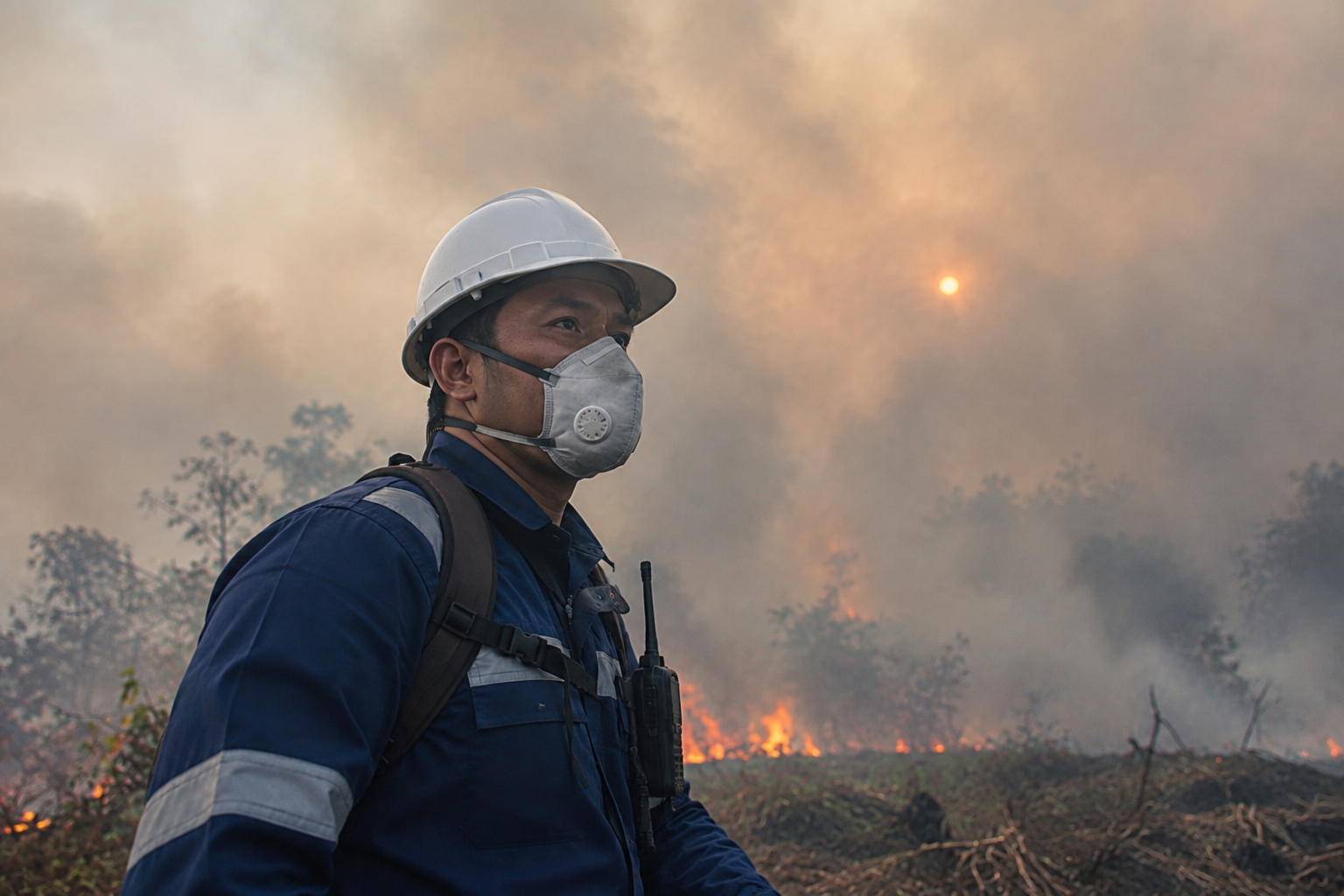
Forest and Land Fires: Workplace Safety Risks Every Field Engineer Should Know
Forest fires are more than an environmental concern. Smoke exposure, reduced visibility, and changing field conditions can also affect the health, safety, and productivity of industrial workers.
When Environmental Risks Become Workplace Risks
Forest and land fires are not just environmental issues. Their impact can extend to the people who keep industrial operations and projects running.
Forest and land fires, commonly known as karhutla in Indonesia, are a concern during periods when dry conditions increase the risk of fires and smoke spreading across affected areas.
According to figures cited in an October 2026 report by Indonesia's Coordinating Ministry for Human Development and Cultural Affairs, the cumulative area of burned land had reached approximately 202,000 hectares as of October 15, 2026. Smoke exposure has also been associated with respiratory problems in several regions.
For field engineers, technicians, and other industrial professionals, these conditions highlight the importance of assessing environmental hazards before work begins.
How Can Forest Fire Smoke Affect Field Workers?
For professionals working at industrial facilities, outdoor project sites, and remote locations, smoke can introduce additional hazards that require careful assessment.
Smoke Exposure & Respiratory Health
Smoke contains fine particles that can enter the respiratory system. Exposure may cause coughing, eye irritation, and breathing difficulties, while potentially worsening existing respiratory conditions.
Reduced Visibility at Worksites
Smoke haze can make it harder to see surrounding hazards, observe site conditions, operate vehicles safely, and carry out inspections in outdoor project environments.
Concentration & Work Performance
Physical discomfort, fatigue, and poor environmental conditions can affect concentration. This is particularly important when tasks involve technical equipment and safety-critical operations.
What Should Engineers and Companies Do?
When air quality deteriorates, safety decisions should be based on actual site conditions, exposure assessments, and established occupational health and safety procedures.
If conditions are unsafe, work activities should be reassessed. Workers should follow site procedures and report hazards to their supervisors.
Monitor Air Quality and Site Conditions
Check official air quality information, weather updates, and relevant safety alerts before carrying out outdoor activities.
Use Appropriate Respiratory Protection
Select respiratory protective equipment based on the identified hazards and exposure levels. Ordinary masks may not provide adequate protection against fine particles.
Review Work Activities and Schedules
Assess whether outdoor tasks should be adjusted, restricted, postponed, or temporarily suspended when conditions are considered unsafe.
Follow Safety and Emergency Procedures
Engineers and supervisors should coordinate risk controls, communicate changing site conditions, and follow applicable emergency response procedures.
Recognize Symptoms and Seek Assistance
Stop working and seek appropriate medical attention if breathing difficulties or other concerning symptoms occur or worsen.
Productivity Matters.
Worker Safety Comes First.
Protecting workers requires more than individual awareness. Companies must also provide appropriate risk controls, protective equipment, clear procedures, and effective safety communication.